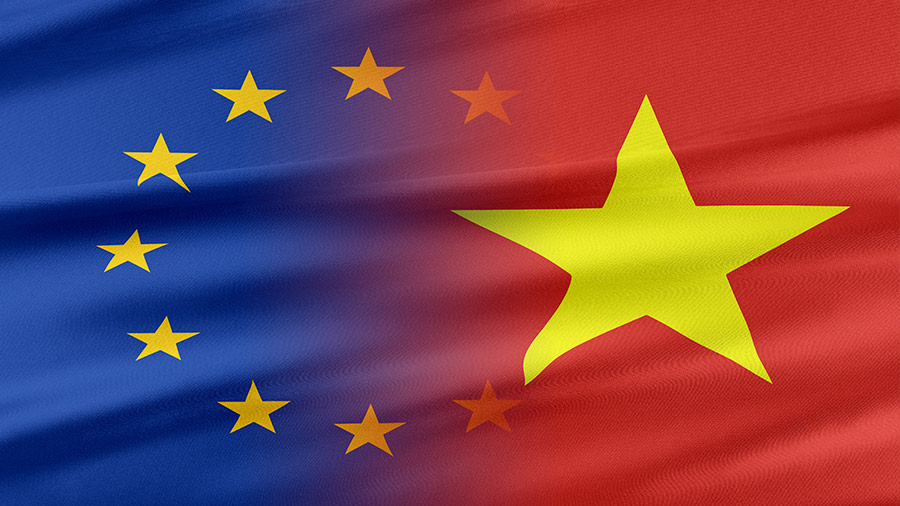
Vietnam is taking a number of actions to accelerate digital transformation to adapt to the global health crisis and to develop in the new normal. Giorgio Aliberti, EU Ambassador to Vietnam, talked to VIR’s Bich Thuy about the importance of the EU-Vietnam Free Trade Agreement for spurring the digitalisation in the country.

In the first half of 2020, trade between the ASEAN region and China rose 5.6 per cent to $314 billion, accounting for 14.7 per cent of China’s total foreign trade volume, signifying the growing trade relationship between China and the ASEAN region since the outbreak of the US-China trade war.

According to the Vietnam Steel Association (VSA), the third quarter of 2020 recorded a breakthrough in the production and consumption of steel products after the first half of the year slowed down due to the impact of the pandemic. This has helped consolidate the business growth prospects of these businesses in the last three months of the year.

The Covid-19 pandemic had a strong impact on the production and export of Vietnamese leather and footwear industry during the first three quarters of the year. In the finalmonths of the year, although there are some better signs, the leather and footwear export forecast in 2020 cannot reach the goalof US$24 billion.

The EU-Vietnam Free Trade Agreement (EVFTA) is likened to a "highway" leading Vietnamese goods, including agricultural products, to the large and potential EU market quickly and effectively. However, to go on that "highway", Vietnam is suggested to prepare a "vehicle" that satisfies the European standards.

From the early days of implementing the “Đổi mới” (Renovation) policy in the late 1980s, the bigger hardships Vietnamese entrepreneurs encountered, the stronger they have become. We can see their strong, restless desire for making Việt Nam more powerful, prosperous and civilised.

Trade remedies are an effective tool to protect the rights domestic manufacturing industries in the context of integration. However, not many enterprises have enough knowledge and skills to use this tool effectively.

In the context of COVID-19 pandemic’s complicated developments disrupting international trade, Vietnam’s exports have still maintained positive growth.

As Vietnam is continuously increasing its presence and exploring new export markets, applied trade remedies against domestic producers and their goods have become more frequent. However, Chu Thang Trung, deputy director of the Trade Remedies Authority of Vietnam under the Ministry of Industry and Trade explained to VIR’s Van Nguyen why he sees little reason to be pessimistic about the recent rise in trade remedy cases.
| The site is done with the technical support of the project BWTO |