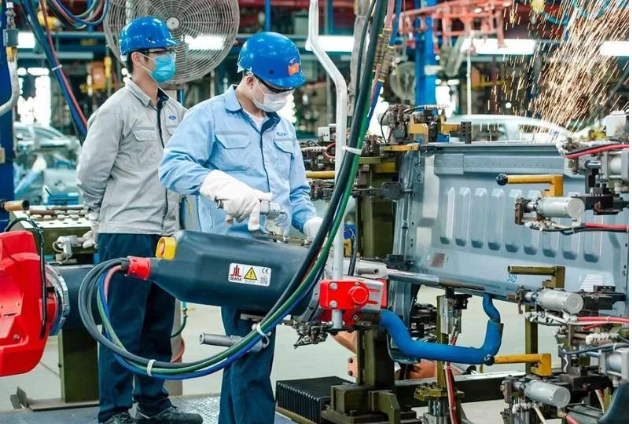
 In this interview, Dr. Nguyễn Quốc Việt, Deputy Director of the Vietnam Institute for Economic and Policy Research (VEPR), elaborates on the broader economic impact of this situation and what it means for both Vietnamese and U.S. companies.
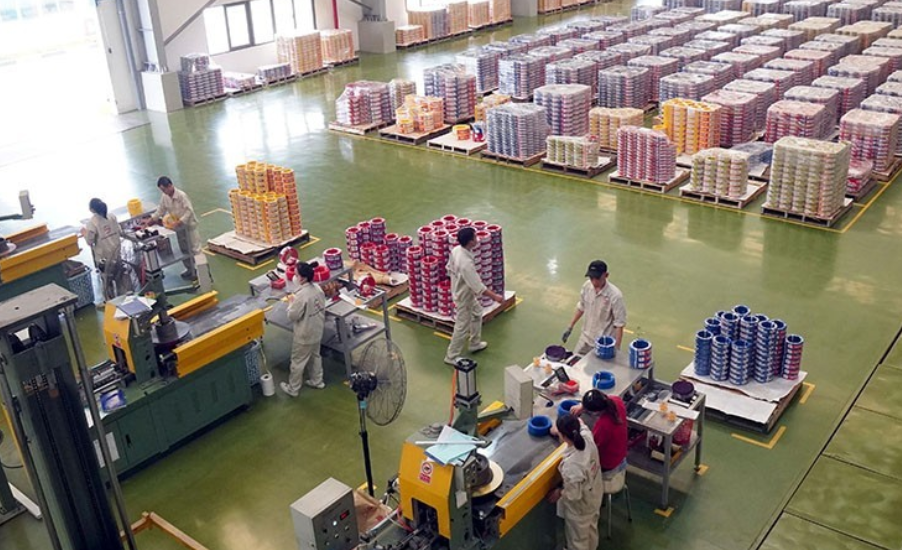 A report released by the World Bank in August noted that Vietnam’s economic growth is expected to pick up in 2024 thanks to a recovery in the export of manufactured goods, tourism, consumption, and investment.
 Two key sectors that stand to benefit are textiles and garments, as well as fruits and vegetables. However, challenges remain, and success will depend on how well businesses navigate these opportunities and obstacles.
 According to data released by the General Statistics Office of Vietnam on September 6, the preliminary total value of imports and exports in August reached $70.65 billion, an increase of 0.8 per cent compared to the previous month and a rise of 13.5 per cent compared to the same period last year.
 The Signetics Corporation, a member of South Korea’s Young Poong Group, a semiconductor supplier for many large corporations, such as its compatriots Samsung and SK, in August announced plans to build a factory at the Ba Thien I Industrial Park in northern Vinh Phuc province with total investment of some $100 million. Covering 5 ha, the factory will manufacture key products used in memory chips, GPUs, and TVs, and is expected to officially come into operation at the end of 2025.
 Vietnam is expected to establish a trading exchange for raw materials and accessories for the fashion industry in 2025.
 Identifying the fight against illegal, unreported, and unregulated (IUU) fishing as a priority, to remove the European Commission’s (EC) ‘yellow card’ warning against Vietnamese seafood, the coastal provinces in the southern part of the Red River Delta, namely Thai Binh, Nam Dinh and Ninh Binh, are working hard to prevent illegal fishing.
 Amidst the strong wave of shifting production investments and diversifying global supply chains by multinational companies, experts view this as a significant opportunity for Vietnamese suppliers and supporting industries.
 It is extremely necessary to grasp and understand the new EU regulations such as CBAM and EUDR. Thereby, businesses have plans, measures and roadmaps to adjust export production activities, maintain and develop export markets.
 The United States is the country that investigates and applies the most trade defense measures to Vietnamese export goods. Vietnamese export businesses when being investigated by the US for applying trade defense measures need to pay attention to choosing the country and replacement value.















| The site is done with the technical support of the project BWTO |