
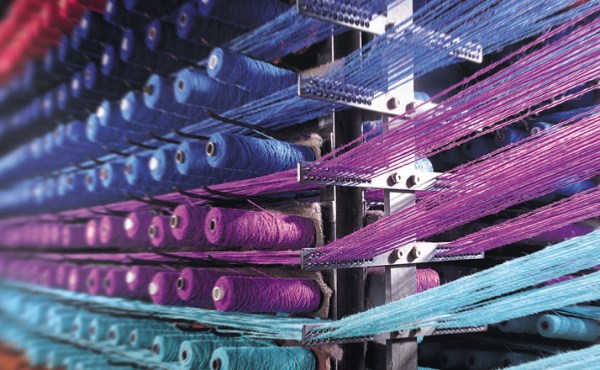
Details have been released that reveal certain tariffs are to abolished regarding textile inputs and products exported and imported between Vietnam and the European Union (EU) under a trade deal struck in August 2015.
The full text of the agreement was released on 1 February, and shows how Vietnam’s powerful clothing sector is keen to lower its trade barriers for inputs, helping make up for its lack of local backward linkages. Under the agreement, some tariffs would be removed immediately, as soon as the deal is ratified.
The documents show this includes 12% duties on Vietnam imports of EU-made textiles made from artificial yarn, dyed, printed and bleached, plus woven fabrics obtained from strip, and needleloom felt and stich-bonded fibre fabrics, for instance. Also 3% duties on EU-made artificial filament tow from synthetic and artificial fibres will be scrapped at the same time, along with 5% and 12% duties on processed artificial staple fibres for spinning, knitting yarn.
Commenting on the text, EU trade Commissioner Cecilia Malmström says that once ratified, “the agreement will unlock a market with huge potential for EU firms. Vietnam is a fast-growing economy of more than 90 million consumers with a growing middle class and a young and dynamic workforce.”
On the clothing sales side, the EU is removing duties on Vietnamese exports, promoting potential cyclical trades, the release texts confirm. For instance, the EU would, over the six years following the ratification of a deal, phase out 12% duties on knitted cotton overcoats, car coats, capes, cloaks, anoraks (including ski jackets), windcheaters, wind jackets. Over four years it will aim to phase out 12% duties on artificial fibre overcoats, car coats, capes, cloaks and, upon ratification, 12% tariffs on knitted anoraks (including ski jackets), windcheaters and wind jackets.
A similar mix of timetables for erasing EU duties is quoted for a wide range of Vietnamese-made clothing and accessories – woven and knitted, from immediate abolition to phasing out tariffs over six years.
Meanwhile, details have been announced on determining the origin of textile and clothing products, so they can qualify to benefit from the agreement’s trade advantages. It includes complex guidance on assessing the origin of mixed fabrics. For example, the chapter on origin says a “synthetic yarn which does not satisfy the origin rules, or woollen yarn which does not satisfy the origin rules, or a combination of the two, may be used, provided that their total weight does not exceed 10% of the weight of the fabric.” Processes listed as not triggering a declaration of origin for a product includes ironing or pressing of textiles and textile articles.
The EU has also released details on more general agreements on reducing trade and investment restrictions. This includes chapters on reducing technical barriers to trade, trade in services, e-commerce, customs and trade facilitation, government procurement, as well as trade remedies.
Commenting on an investment protection chapter within the deal, Malmström adds, “The agreement will also help trigger a new wave of high-quality investment in both directions, supported by our new investment dispute resolution system with an appeal mechanism."
Sosurce http://www.investorvillage.com
Keywords: Vietnam, drop, tariffs, welcome, European, fabrics, yarn