
Vietnam’s agricultural products will face stronger competition from other member states of the pan-Pacific free trade agreement, the Ministry of Industry and Trade has warned.
Competition will grow strong given tariff reductions and exemptions under the Trans-Pacific Partnership (TPP) trade deal for farm produce of the member states which have advantages in agriculture, according to a proposal drafted in April by the ministry for the Government to present to the National Assembly for ratification.
The TPP was signed by Vietnam and 11 other Pacific Rim countries in New Zealand in February this year. Besides opportunities brought by the trade pact, the draft points out it will bring a slew of challenges, particularly those relating to socioeconomic issues which require Vietnam to solve by speeding up reforms.
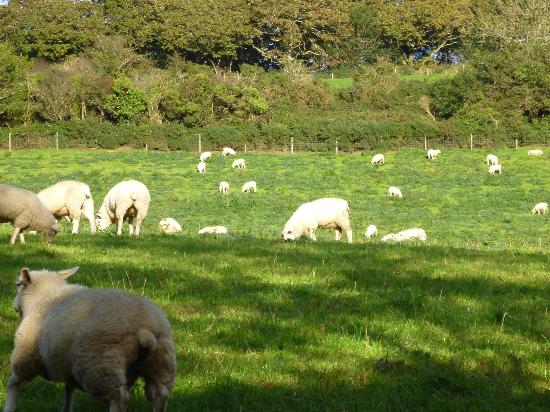
The ministry said Vietnam can produce a range of meat products like chicken and pork but their competitiveness is poor. Meanwhile, these products are what other TPP member states are strong in, such as the U.S., Australia, New Zealand and Chile.
However, Vietnam will be granted a long roadmap to cut and exempt tariffs for agricultural products, such as more than 10 years for chicken. The roadmap is longer than what Vietnam committed to opening up the market for products from other ASEAN markets.
Milk, soybean, corn and animal feed materials will also see fiercer competition but the impact is lesser as Vietnam still needs to import large volumes of these products for local processing. Vietnam already pledged to facilitate milk and beef imports from Australia and New Zealand under the ASEAN-Australia-New Zealand free trade agreement.
Vietnam will reserve the right to impose quotas on sugar, salt and poultry egg imports, and bring down the duty on tobacco imports 20 years after the TPP takes effect.
To overcome challenges, the Government will have to adopt a new growth model, restructure production and boost application of science and technology to keep Vietnamese products competitive, particularly farm and livestock products, on the home market.
The ministry noted the TPP could cause difficulties for domestic producers of industrial products such as paper, steel and autos. Nevertheless, the pressure will not be significant in the next 10-15 years as Vietnamese products target medium-income consumers in while products of other TPP countries are for the high-end segment.
With tariff exemptions, Vietnam will collect less tax revenue from products made by other TPP countries that Vietnam slaps high import duties like confectionery, jewelry, metal items, air-conditioners, interior furniture, high-capacity motorcycles, wine and tobacco.
Besides, Vietnam’s commitments to the TPP will make some groups of enterprises struggle and even go bankrupt, especially those relying on Government subsidies and use outdated technology. This would result in layoffs.
However, the ministry said impacts of the TPP on Vietnam will be inconsiderable and short-lived as most of the economies in the TPP do not directly compete with Vietnam, except for agricultural products.
Vietnam pledged to remove 66% of tariff lines right after the TPP takes effect and 86.5% in the following three years. The exemptions of the remaining tariff lines will be effective in the next period of 5-10 years.
Source: https://www.vietmaz.com
Key words: Farm goods, to face, fiercer competition, TPP