
Starting from a low base, the developing nations comprising Cambodia, Laos, Myanmar and Vietnam (CLMV nations) are among the world’s fastest growing economies, says RAM Rating Services Bhd.
These latest additions to the Asean community, which collectively make up 11% of the region’s gross domestic product, are making rapid progress resulting from market liberalisation, foreign aid and large capital inflows that have boosted their performance, noted RAM’s October sovereign commentary entitled “Cambodia, Laos, Myanmar and Vietnam — Rising stars with enticing prospects”.
In the near term, the rise of the CLMV nations will have limited impact on Malaysia’s trade as they account for less than 3% of our total exports,” RAM head of sovereign ratings Esther Lai told The Malaysian Reserve.
“However as these economies progress and their purchasing power increases, we expect their share of trade to expand in tandem. The liberalisation of these nations has attracted foreign direct investments (FDIs) from Malaysia,” she said.
FDI inflows from Malaysia into the CLMV nations include Maybank Investment Bank Bhd and CIMB Group Holidngs Bhd in the banking sector and property developer SP Setia Bhd in the real estate sector.
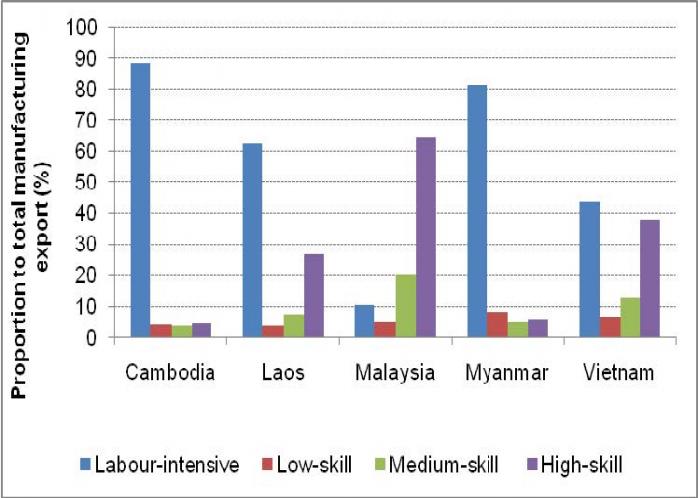
RAM pinpointed Vietnam as the biggest competitor to Malaysian exports among the CLMV nations. “Although labour and resource intensive manufactured goods still account for the bulk of Vietnam’s exports, there is an increasing inflow of FDI in higher value-added manufacturing activities,” she said.
RAM said Vietnam’s economy is relatively diversified with exports ranging from garments, natural resources and electronic goods.
“The relocation of technology factories such as Samsung to Vietnam has also led to a surge in exports of electronics as a percentage of total exports of 16.2% in 2000 increased to 28.3% in 2015. This is also reflected in Vietnam’s export mix,” Lai said.
The South Korean tech giant Samsung Electronics Co plans to move one of its three refrigerator production lines in Gwangju, Jeolla Province in South Korea to Vietnam, as part of a group-wide plan to reinforce investment and presence in Vietnam.
The move also is part of a bigger readjustment of Samsung’s manufacturing network in Asia and Vietnam is emerging as a new candidate to take up the role as the world’s factory base.
Vietnam has become the favoured destination for global companies including Samsung, Korean manufacturing company Hyosung Corp and Japanese car manufacturer Toyota Corp as it recently signed the Trans-Pacific Partnership (TPP), which will reduce 18,000 tariffs and provide a cheap labour force.
The present China-Vietnam political tensions have resulted in a slower inflow of Chinese FDIs. Following territorial disputes over the South China Sea and anti-China protests in 2014, Chinese FDIs into Vietnam shrank 78.4% that same year, said RAM.
Despite the tensions, China’s trade influence is strongly felt in the region and the cooling of the Chinese economy will inevitably result in spill-over effects to the CLMV nations, it added. RAM said Vietnam’s accession to the TPP Agreement (TPPA) will benefit its thriving manufacturing sector in the form of reduced import duties. In the long run, this will boost its competitiveness and shore up the Vietnamese economy.
This will have a negative impact on the other CLMV nations given that they are not part of the TPPA. Cambodia would likely be the biggest loser as the TPPA may result in increasing businesses being directed to Vietnam instead of Cambodia, it cautioned.
Moreover, Cambodia’s trade with the US has declined due to rising labour costs and logistical deficiencies, thus the reduction in industry tariffs brought on by the TPPA could be another blow, RAM added.
Given that agriculture is an important income generator for the CLMV nations contributing more than 15% of their collective GDP and 40% of their labour force, they are vulnerable to adverse weather conditions — a common occurrence in the region (such as the devastating Typhoon Ketsana in 2009), said the rating agency.
Nevertheless, Cambodia’s competitively priced labour force attracts substantial investments, mainly in the garment sector. Elsewhere, the commodity-related industrial sectors in Laos’ such as mine-rals (ores and metals) and natural gas, and Myanmar’s food products have been flourishing, it noted.
In terms of investments, Cambodia is the largest recipient of Chinese investment amounting to more than 15% of total Cambodian FDI.
As part of the Asean community, the CLMV nations enjoy limited trade barriers among member countries as well as in five external Asean free trade agreements. Collectively, these account for more than 50% of Laos, Myanmar and Vietnam’s total trade with Cambodia the only exception as its main trading partner is the US, RAM added.
Source: http://themalaysianreserve.com
Key words: Vietnam, biggest competitor, Malaysian exports