
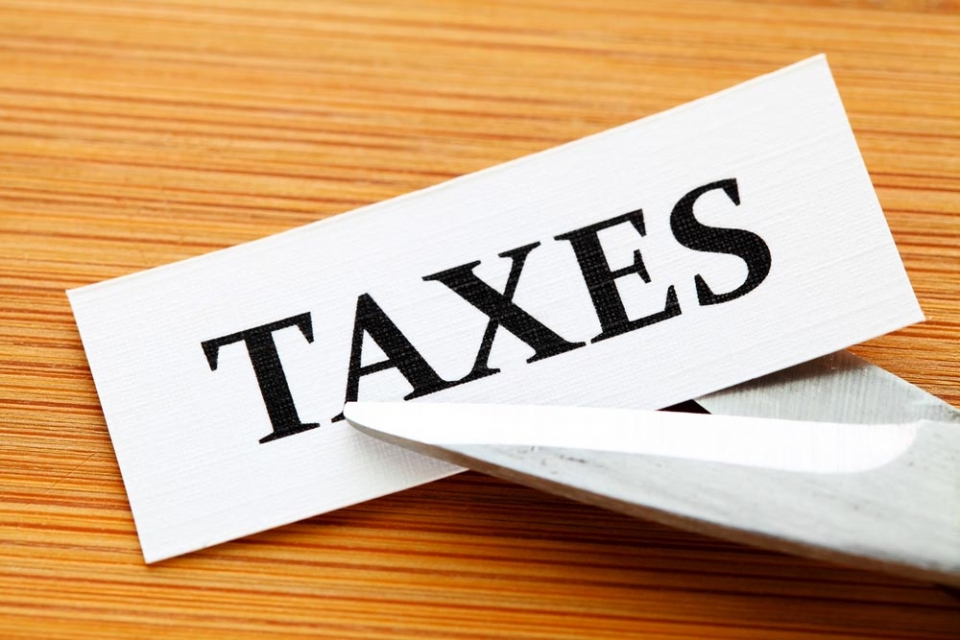
The Ministry of Finance has submitted to the Government tax solutions to remove difficulties for enterprises, which will reduce corporate income tax (CIT) for small and medium enterprises (SMEs) from 20% to 17% within 4 years.
According to many experts, the Government’s policies not only support businesses through tax cuts but they also foster revenues on the basis of development of the business community, thereby contributing to the State budget.
3% for renewable production
CIT is a kind of direct taxes, regulating the taxable income of enterprises and evaluating production and business efficiency of enterprises. Therefore, a reasonable, clear, transparent and efficient tax policy will play an important role in promoting the development of production and business, enhancing accounting and bringing benefits for both businesses and the State budget. Mrs. Nguyen Thi Cuc said: "I think the CIT rate of 17% for small and medium-sized enterprises at this time is reasonable. This preferential tax rate will help enterprises have more financial resources to expand the business and production, reducing the dependence on bank loans, realizing cost savings, thereby reducing costs, and contributing to improving the competitiveness and attracting investment".
Agreeing with the new CIT rate that the Ministry of Finance is proposing, Mrs. Nguyen Minh Thao, Head of Business Environment and Competitiveness Department, Central Institute for Economic Management said that small and medium-sized enterprises are currently contributing to GDP of more than 40% with more than 20% of exports and about 29% of state budget revenues. Moreover, these enterprises added 5.12 million jobs. Therefore, the reduction of corporate income tax for small and medium-sized enterprises is necessary to help these businesses to reduce their tax burden.
"In particular, I think that if the tax is reduced, the business conditions will be more favorable, which promote a number of business households in the informal sector to participate in business enterprises, contributing significantly to the State budget in the near future", Mrs. Thao said.
Mrs. Nguyen Thi Cuc said that, in the context of the current difficult period when many businesses are struggling to exist, the policies of tax reduction will nurture revenues in the long term and encourage businesses to produce more effectively.
"Although the tax reduction will put pressure on the State budget in the short term, but I think the ability of collecting taxes will be higher in the long run because if the pressure of paying taxes is high, it will lead to the tax evasion and losses to the State budget. On the other hand, a tax reduction of 3% will create renewable production for investment business, thereby creating more revenues and higher amount of VAT payment".
Monitoring criteria for classification
Many economists stated that the proposed tax rate of 17% for small and medium-sized enterprises was a great effort of the Ministry of Finance to follow Government Resolution 19 / NQ-CP of 2014, 2015, 2016 and Government Resolution 35 / NQ-CP. However, regarding this proposal, these economists are quite concerned about the criteria and thresholds for determining the size of the enterprises which are entitled to this preferential tax.
According to Mr. Truong Thanh Duc, a lawyer and an arbitrator at Vietnam International Arbitration Centre (VIAC), the most important criterion for determining which firms enjoy preferential tax is enterprises with the revenue less than 20 billion vnd per years. However, the problem is that there will be more enterprises carrying out revenue fraud, or refusing to become large enterprises or increase their size. “If such business classification criteria are not clear together with the loose supervision, it will negatively affect the State budget revenues and cause inequalities in economic development".
"The preferential tax rate for business in the current difficult context is likely to be the poor receiving 'fishes' when they are hungry. But in the long run, the Government can not feed the poor by “fishes” forever. Therefore, the Government should provide the “fishing rod” so that the poor can work for a living on their own. The “fishing rod” is policies which indirectly impact on the business environment, such as administrative procedures, legal framework, counseling support and other tax incentives. Thus, the support for businesses will be really effective", Mr. Duc said.
It is undeniable that the Ministry of Finance has made great efforts in reforming and supporting enterprises through tax incentives recently. Typically, the list of CIT refund has been widened. Mrs. Nguyen Thi Cuc said: "In the past time, many kinds of taxes are non-deductible expenses, but now this list of deductible items is widened. This is also an indirect way to reduce the corporate income tax".
Source: http://customsnews.vn/
Key words: Reduce tax, in the short term, to enhance, long-term revenue.