
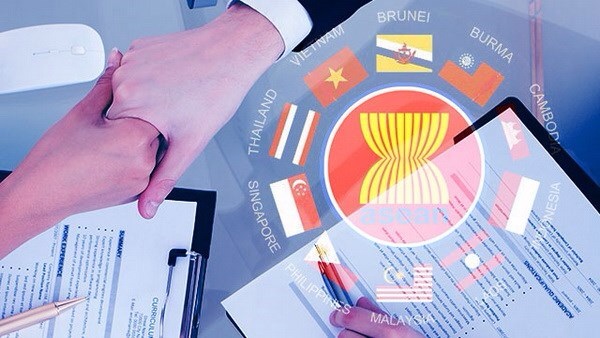
The 10 ASEAN member states recently signed an official declaration to establish the ASEAN Economic Community (AEC), opening a new chapter in the region's 48-year history.
After more than 13 years of discussion around forming the AEC, the declaration finally comes into effect on December 31 , when the region turns into a single market and production base.
At the same summit, ASEAN leaders also endorsed a roadmap for the next decade "ASEAN 2025: Forging Ahead Together". The group aims to create a community that is "politically cohesive, economically integrated and socially responsible".
A SINGLE MARKET
ASEAN has a population of 622 million. Gross domestic product (GDP) in 2014 was US$2.6 trillion (NZ$3.9t). This is expected to rise to US$4.7t by 2020.
Back in 2007, the group created an eight-year blueprint for the AEC. The goal was to allow free movement of goods, services and skilled labour.
According to the latest scorecard, the group had implemented 79.5 per cent of the measures called for under the AEC.
Among prioritised measures, the rate of implementation was 92.7 per cent. Out of the 506 action plans 37 are yet to be implemented.
Thus, the group fell short of meeting its 2015 target and will no doubt aim to complete these tasks in the year ahead.
INTRA-ASEAN TRADING
Intra-regional trade made up about 24 per cent of ASEAN's total global trade for the last decade, ranging from 13.9 per cent in Vietnam to 64.9 per cent in Laos.
With the AEC, intra-regional trade is likely to increase. The statistics for the European Union sit at 60 per cent. Corruption, uneven infrastructure and related costs, are among the obstacles currently in the way of increased trade within ASEAN.
ASEAN is often seen as an alternative for Chinese and Indian markets. Of great significance is that the free trade agreement involving the ASEAN-China Free Trade Area was upgraded at the same time as the AEC was declared.
ASEAN is also part of the Regional Comprehensive Economic Partnership (RCEP) negotiations that include China, India, Japan, South Korea, Australia and New Zealand. If this partnership goes ahead, we are unlikely to see the percentage of intra-ASEAN trade pick up for a while, as China, Japan and South Korea are large trading partners of the group.
CHALLENGES
Some analysts argue that the establishment of the AEC is more of a political move than an economic one - ASEAN seeks to use the AEC to achieve a greater say in regional and global affairs. The RCEP negotiation is a good example of this.
Given, also, the diversity of the region, there is still a lack of ASEAN identity. Without this identity, it is hard to make strong progress.
Because almost all of the AEC member states are developing countries, it is probably the most ambitious attempt at economic integration to date.
Nonetheless, it is a work-in-progress.
Protected sectors such as agriculture, steel and auto production are still a no-go in this process.
ASEAN citizens will be allowed to work in other countries in the group, but work will be limited to jobs in eight sectors, including engineering, accountancy and tourism. The eight sectors account for only 1.5 per cent of the total jobs in the region.
ASEAN also needs to reduce disparity by providing more support to Cambodia, Laos and Myanmar - the least developed economies in the group. These countries, along with Vietnam have until 2018 to bring down tariffs.
All in all, the AEC has certainly arrived, gradually and not in a big way. Given its size potential, it is not a market to be disregarded. There are increasingly more ways for foreign companies to enter markets in the region, and more opportunities to create regional hubs for operating in Southeast Asia.
Source: http://www.stuff.co.nz
Key words: The potential, challenges, the ASEAN Economic Community