
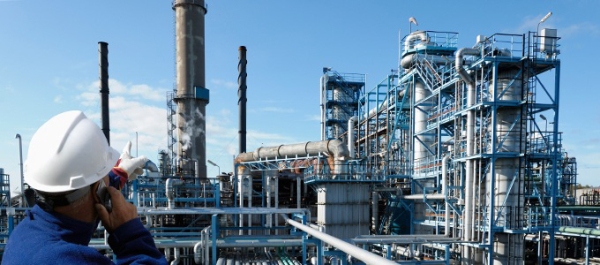
The number of industrial parks in Vietnam continues to rise as foreign investment pours in. As of July 2015, there are now 299 industrial parks in Vietnam with 212 parks currently in operation.
In the first seven months of 2015, four have been newly established or expanded. Most industrial parks are located in the Northern, Central and Southern key economic zones with the largest concentration in the Southern key economic zone. These parks occupy a natural land area of almost 84 thousand hectares, with about 66 percent of the total land area designated as industrial land for leasing. Over 26 thousand hectares of industrial land have already been leased, reflecting a 48 percent occupancy rate.
FDI in IZs stats
Within the first seven months of 2015, 329 of 1,068 new investment projects that were granted investment certificates were FDI projects, representing US $3.1 billion of the US $6.92 billion of total newly registered capital. As of July 2015, all industrial parks in Vietnam cumulatively attracted 5,857 foreign investment projects with total registered capital amounting to US $90.7 billion, including US $53 billion of total investment capital.
Out of 47 provinces and cities that welcomed investors in the first seven months of 2015, Ho Chi Minh City took the lead in attracting foreign investment with total newly and additionally registered FDI capital of US $2.4 billion. Binh Duong and Dong Nai provinces took second and third, making the Southeast region the primary location for FDI; followed by the Red River Delta in the North.
In deciding which industrial park to locate operations for a FIE in Vietnam, there are several factors that must be considered; including geographic location, land, labor, infrastructure, industry, business environment and incentives.
Location
FIEs should first consider geographic location. This involves research into the advantages and disadvantages of locations of industrial parks considered. In terms of business environment, the top ranked provinces in 2014 were Da Nang, Dong Thap, Lao Cai, HCMC, Quang Ninh; representative of all different regions of Vietnam.
Options can be further narrowed down by geographical concentration of industries as some regions host more enterprises from a specific industry than others. Representing some of Vietnam’s main export sectors, garment and textile manufacturing is concentrated in both North and South Vietnam and footwear and furniture manufacturing are both concentrated in South Vietnam. The North is arguably the better choice for an enterprise importing input goods from China while the South has the advantage of being near the largest commercial port in Vietnam. Proximity to key destinations such as airports, seaports, major cities, main highways and borders is also important.
There are a variety of ways to establish operations in an industrial park. Industrial parks possess land use rights from the government and essentially sublease their land and existing factories to tenants for a period of up to fifty years, depending on when the industrial park was established. The FIE would either rent an existing factory or rent an area of land to build a custom factory in which case construction costs, currently US $100 to US $150 per square meter for workshops and US $120 to US $210 per square meter for office space, would have to be considered.
Out of a representative sample of industrial parks, renting an existing factory would cost US $2.50 to US $6 per square meter per month, while renting land would cost US $55 to US $150 per square meter per year in the North and US $15 to US $95 per square meter per year in the South. Prices vary considerably and depend on a number of factors that influence demand, including the location and quality of the industrial park.
Labor
FIEs in Vietnam are relatively small by international standards. Last year, 79 percent of FIEs surveyed in the Vietnam Provincial Competitiveness index had fewer than 300 employees. Vietnam is labor-abundant with most industrial parks representing the light industries. In areas in which industrial parks are located, there are many skilled workers looking for employment as well as technical universities to recruit from.
Vietnam’s key attraction to foreign investors is the low cost of labor. Vietnam’s minimum wage is a tiered system ranging from VND 2.15 million to VND 3.1 million (US $95.59 to US $137.83) per month, based on which of four regions employees are working in. Minimum wage for Region I, Hanoi and Ho Chi Minh City, is VND 3.1 million a month while minimum wage for region II, which includes provincial level cities, is VND 2.75 million. Most industrial parks are located in regions I and II while region III and IV are less developed. Additionally, trained employees must be paid at least seven percent higher than the regional minimum salary by law. Average salaries at a sample of industrial parks in Hanoi and surrounding provinces range from US $110-US $252, depending on industry and skill. Overtime, night wages and social insurance should also be taken into consideration.
Infrastructure
Infrastructure is often a deciding factor with regard to the success of an industrial park. Industrial parks that have failed to attract enterprises in the past often lacked good infrastructure and management as the country’s infrastructure was slow to develop amidst rapid industrialization. As Vietnam continues to attract FDI, industrial parks have been improving their infrastructure to meet international standards. Improvements include higher quality industrial parks in general, quality factory buildings and warehouses, stable sources of electricity and water, wastewater treatment plants, garbage disposals, fire prevention systems, improved telecommunications, access to a banks and post offices, logistics services and accessible internal roads. Many industrial parks are located near national highways that lead to airports, seaports and rail stations for easy transport among other conveniences.
Types of Industries
Some industrial parks such as Saigon Hi-Tech Park in Ho Chi Minh City and Pho Noi B Textile and Garment Industrial Park in Hung Yen Province outside of Hanoi specialize in a specific manufacturing industry while others have a variety of manufacturing industries represented by their tenant companies. Saigon Hi-Tech Park prioritizes specific technology industries and currently hosts 80 companies, including 31 FDI projects with total registered capital accounting for over 48 percent of FDI flow into the city at over US $3.5 billion. A second hi-tech park under the same developer will be completed within six years as hi-tech manufacturing in Vietnam continues to grow.
FIEs looking to establish operations in an industrial park should consider the types of industries already represented by existing tenants and how the composition could affect their own potential operations. It would, for instance, be difficult for a low-end manufacturing company to minimize labor costs in an area with many hi-tech firms and there are many different investment incentives depending on industry and location.
Incentives
Vietnam has a series of incentives in place that encourage both domestic and foreign investment. Tax incentives include exemptions or reductions of Corporate Income Tax (CIT), Value-Added Tax (VAT) and import tariffs for specified periods, and are granted based on the business lines and location of the FIE. Regulated encouraged sectors include education, healthcare, sports, culture, high technology, environmental protection, scientific research, infrastructural development and software manufacturing. Administrative divisions or locations with investment incentives include disadvantaged or extremely disadvantaged areas, industrial parks, export-processing zones, hi-tech zones, and economic zones.
Additionally, investment projects in rural areas with at least 500 employees and investment projects with invested capital of at least VND6,000 billion(US $266.76 million) also qualify for incentives.
Source: vietnam-briefing
Key words: The Guide, Understanding, Vietnam’s Industrial Zones